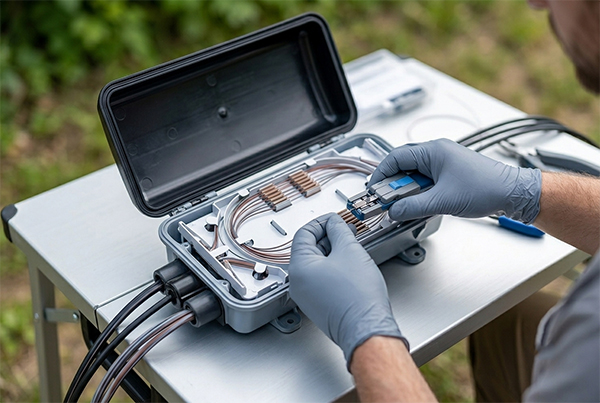
Why Your Next Big Project Needs the Same Cables as a World Cup Stadium
50 terabytes.
That's the amount of data generated during a single 2026 World Cup match — from live 8K broadcasts to in-seat replays to 60,000 fans posting, streaming, and checking fantasy stats all at once.
Here's the part most people don't think about:
That data doesn't travel through the air. Not really. The wireless signals that hit your phone are just the last 50 feet. The other 99.9% of the journey — from the stadium to the broadcaster to your screen — travels through fiber optic cables.
And the cables handling that load are not your average office network runs.
They're tougher. They carry more strands. They're built for environments where failure isn't an option — because nobody wants to explain why the game feed dropped during a penalty shootout.
So here's the question for you:
If you're designing a network for a hospital, a campus, a data center, or a city — why would you settle for less than what a World Cup stadium demands?
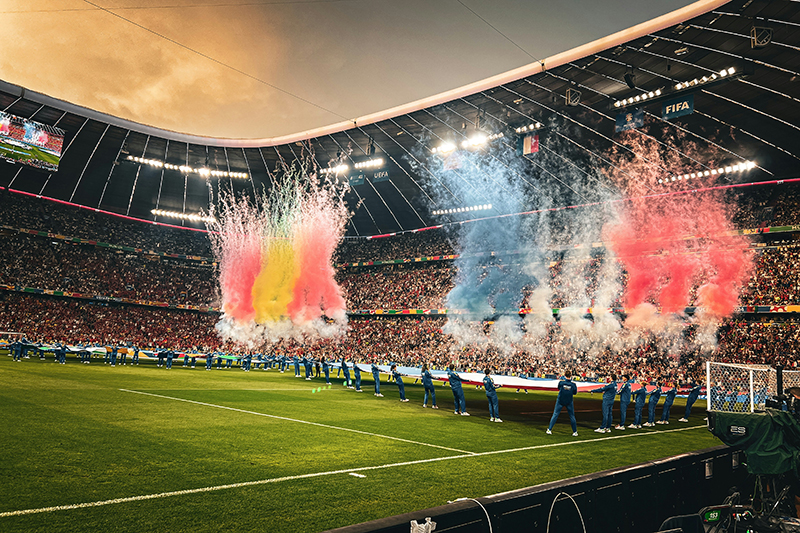
What's Actually Happening Inside These Stadiums
Let's start with the scale.
Verizon, the official network provider for the 2026 World Cup, boosted capacity at every venue by 3x to 5x over standard deployments. That doesn't happen by accident.
Here's what that capacity looks like on the ground:
- Thousands of Wi-Fi 6E access points — not scattered loosely, but positioned under seats, in concourses, and around concession stands to cover every inch
- Hundreds of miles of new fiber cable — pulled through tunnels, risers, and conduits that weren't designed for this much copper or glass
- Real-time data streams for referees, broadcasters, security teams, medical staff, and operations — all running simultaneously
- In-seat replay and ordering systems that require low-latency connections to function smoothly
Now here's the number that stops most network engineers:
One stadium. 60,000+ devices. All connecting at the exact same moment. Kickoff isn't gradual — it's a step function. One second the network is quiet. The next, it's handling a load that would crash most enterprise data centers.
And it has to work. No excuses. No "we'll reboot and try again."
This is the kind of load that exposes every weak link in a network. And the weakest link is almost always the cable.
Why Standard Cables Don't Cut It
If you've ever pulled standard fiber off a reel and run it through a building, you know what it can handle. Office environments. Moderate bends. Predictable temperatures. Static conditions.
A stadium is none of those things.
Here's what's different about the fiber that goes into a venue like this:
1. Fiber Count That Would Make an Enterprise Network Blush
Most office builds run 12, 24, or maybe 48 strands. In a stadium, you're looking at 144, 288, or even 432 strands — and that's just for one segment.
Why so many?
Because every access point needs its own dedicated path back to the core. Every broadcast position needs redundant paths. Every security camera, every point-of-sale terminal, every digital sign — they all add up.
What this means for you: If your next project involves multiple buildings, high user density, or any kind of growth plan, you need to think in higher fiber counts from day one. Pulling once is expensive. Pulling twice is a disaster.
2. Jackets That Don't Quit
Stadium cables run through:
- Concrete tunnels where temperatures spike
- Vertical risers where cables hang under their own weight
- Outdoor segments that see direct sun and summer heat
- High-traffic areas where equipment gets bumped, stepped on, and rolled over
Standard indoor/outdoor jackets won't survive that.
The cable that does survive uses tough, flame-retardant, UV-resistant materials — and it's tested to handle physical stress that would crack cheaper jackets.
What this means for you: Your environment might not be a stadium, but it has its own hazards. Moisture. Heat. Cold. Rodents. Construction equipment. The right jacket material isn't a nice-to-have — it's the difference between a network that runs for 20 years and one that fails in 5.
3. Bend Performance That Matters
This one surprises most people.
In tight spaces — under seating, around structural columns, through crowded conduits — fiber has to bend. And when standard fiber bends too sharply, signal loss spikes. That means slower speeds, dropped connections, and troubleshooting headaches.
Stadium-grade fiber is designed with low bend radius specifications. You can pull it tighter, route it harder, and still get full performance.
What this means for you: Every project has tight spaces. Ceiling plenums. Elevator shafts. Underground vaults. The cable that survives a stadium install will handle your tricky runs without breaking a sweat.
4. Pre-connectorized vs. Field Termination
One more thing:
Stadium builds are fast. You don't have weeks to splice every termination. That's why many venues use pre-terminated assemblies — cables cut to exact length with connectors already installed at the factory.
It costs a bit more up front. It saves weeks on the install. And it eliminates the biggest variable in network performance: splice quality in the field.
What this means for you: If your timeline is tight — and when isn't it? — pre-terminated fiber is worth a serious look. The cost difference is smaller than the cost of delay.
Why This Isn't Just About Stadiums
You're probably not building a World Cup venue.
But if your work involves any of the following, you're facing the same core challenges:
- University campuses: Thousands of students with multiple devices, all online at once. Dead zones aren't acceptable. Capacity needs grow every semester. See a case study >>
- Healthcare facilities: Patient data, imaging, and real-time monitoring can't afford latency or downtime. Reliability isn't a metric — it's a patient safety issue. See a case study >>
- Data center interconnects: Links between facilities need maximum throughput and zero tolerance for signal degradation. Your uptime SLA depends on cable quality.
- Municipal fiber rings: City-wide networks that serve residents, businesses, and emergency services. One weak segment affects thousands of users.
- Industrial and manufacturing facilities: Heat, vibration, dust, and electromagnetic interference. Cable that survives a stadium will thrive here.
- Large-scale events and venues: Even if it's not the World Cup, any major event — concerts, conventions, sporting events — creates the same density spikes.
The common thread?
High density. Unforgiving environments. Zero tolerance for failure.
The stadium is just the extreme case. Your project is the daily reality.
What to Look for in Your Next Fiber Cable
If you're evaluating fiber for a demanding project, here's a quick checklist. Skip the glossy brochures — ask these questions instead:
| Question | Why It Matters |
|---|---|
| What's the maximum fiber count available in this cable type? | Can you scale without pulling new cable later? |
| What jacket materials are offered? | Will it hold up in your environment (heat, cold, UV, moisture, rodents)? |
| What's the bend radius spec? | Can you route it through tight spaces without losing signal? |
| What's the lead time for custom lengths? | Can you get it when you need it, not when the factory ships? |
| Are pre-terminated assemblies available? | Can you save installation time and reduce field splicing risk? |
| Where is the inventory located? | Is it sitting on a dock overseas, or in a warehouse near your project? |
The last one is worth repeating:
Fiber that ships from overseas adds weeks to your timeline. Fiber that ships from U.S. inventory can be on your site in days. When your project is on the line, that difference matters.
How Stanford Optics Fits Into This Picture
We don't build stadiums. But we supply the cable that makes them work — and we do the same for hospitals, campuses, data centers, and industrial facilities across the United States.
Stanford Optics is a U.S.-based manufacturer and supplier of high-performance fiber optic cables. Here's what that means for your project:
Inventory on the Ground
Our primary warehouse is in Berkeley, California, with additional distribution points nationwide. When you order, we ship from U.S. stock — not from a port on the other side of the ocean.
What that means for you: Lead times measured in days, not weeks. And no unexpected delays from customs, shipping container shortages, or port strikes.
Configurations That Fit Your Project
We don't believe in "one size fits all."
Need a specific fiber count? A particular jacket type? An exact length with pre-terminated connectors? We cut to your specifications. You don't pay for extra length you don't need or waste material on reels that don't match your run lengths.
What that means for you: Less waste, faster installation, and a cable plant that's built for your site — not adapted to someone else's standard.
Quality That Meets Real-World Demands
Our cables are built to meet or exceed industry standards — Telcordia, ICEA, and RoHS compliance are the baseline, not the selling point.
What that means for you: When we say a cable handles heat, bend stress, or high-density terminations, we've tested it. We don't guess — we verify.
A Recent Example
A healthcare campus in the Northeast needed 288-count armored cable delivered in five days for a network expansion. Standard lead time from most suppliers: 3-4 weeks.
We shipped from Berkeley on day two. The cable arrived on day four. The install stayed on schedule.
That's not a miracle. That's just having the right inventory in the right place.
The Bottom Line
The 2026 World Cup is a showcase for what fiber optics can handle — but the technology that works in those stadiums is the same technology that should be in your next project.
High fiber counts. Tough jackets. Low bend loss. Fast delivery.
These aren't stadium-only requirements. They're just good engineering.
Whether you're building a campus network, upgrading a hospital, extending a fiber ring, or running cable through a challenging industrial environment — the same principles apply.
Don't spec for the easy days. Spec for the hard ones. The ones where everything is on the line and there's no room for failure.
The fiber that works in a World Cup stadium will work in your project. And it'll probably outlast your expectations — because your environment is easier than a stadium's.
Stanford Optics — High-performance fiber optic cables, engineered for reliability. Shipped from U.S. inventory. Backed by expert support.